6 May 2020 · Shoulder Success podcast · 36 min
101. Return to play testing after shoulder surgery with Jo Gibson
Shoulder surgery in athletes is common following dislocation. Accelerated post-op shoulder stabilisation rehab protocols include early mobilisation to reduce movement, proprioceptive and strength deficits. This has allowed earlier return to play (RTP), however athletes often still have significant proprioceptive and strength deficits up to 2 years post surgery. Despite getting back to play, athletes may struggle to get back to performance.
Following surgery, contact athletes such as rugby players, throwing athletes and young players have additional RTP challenges. Redislocation risks in contact sports such as rugby are high, leading to poor outcomes. Younger athletes are not skeletally mature, and with early RTP following stabilisation surgery may have higher failure rates. How can you identify and address these challenges?
Which tests and features in a patients history help you determine whether a patient is suitable for an early RTP? In this podcast with Jo Gibson (Clinical Physiotherapy Specialist), you’ll explore:
- Which shoulder tests are most valuable with your patients?
- How has emerging evidence challenged our previous approach to RTP testing?
- What are the risks associated with early RTP following shoulder surgery?
- How can you help identify athletes at risk of redislocation?
- Which psychosocial factors impact RTP?
- How does fear of reinjury and levels of anxiety about their shoulder affects RTP?
- How does your patient’s sport of choice affects dislocation risks?
- How is RTP impacted by patients age?
- How do daily stressors impact RTP and predict outcomes?
- Which psychosocial factors impact RTP?
- What is the biggest factor in whether an athlete gets back to play?
- Which questions are key to ask your patients?
- Which questionnaires can you use with your post-op shoulder patients?
- Which tests and combinations of tests have been validated and are evidence-based?
- How can you assess range of movement (ROM)?
- How can you measure patients strength?
- How is rate of force development (RFD) affected following shoulder injury?
- How can you assess RFD?
- How does fatigue impact strength testing eg testing at the start of training compared to the after training?
- How does the kinetic chain impact RTP testing for throwers?
- How can you assess shoulder endurance?
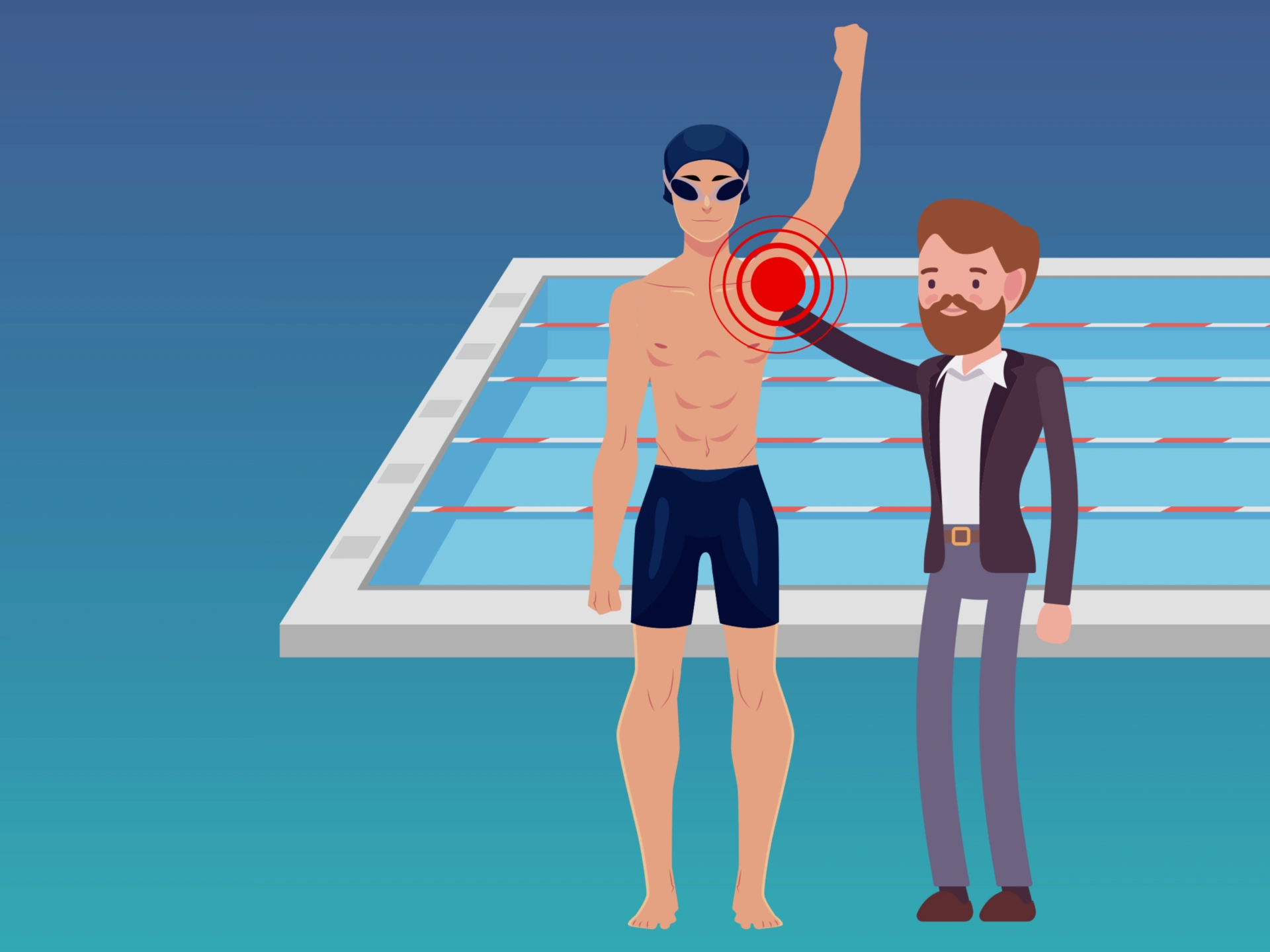
- How can you test if your swimmers are ready for RTP?
- What role does manual therapy have in shoulder rehab?
Free shoulder assessment infographic series

Frozen and stiff shoulder assessment & treatment with Jo Gibson

Shoulder: Steps to Success online course with Jo Gibson
Improve your assessment and treatment of shoulder pain with the Shoulder: Steps to Success online course with Jo Gibson, now available for enrolment at clinicaledge.co/shouldersuccess

Links associated with this episode:
- Improve your assessment and treatment of frozen and stiff shoulders now with Jo Gibson’s online course at clinicaledge.co/frozenshoulder
- Improve your shoulder assessment & treatment with the Shoulder: Steps to Success online course with Jo Gibson
- Download and subscribe to the podcast on iTunes
- Download the podcast now using the best podcast app currently in existence - Overcast
- Listen to the podcast on Spotify
- Improve your confidence and clinical reasoning with a Clinical Edge membership
- Let David know what you liked about this podcast on Twitter
- Review the podcast on iTunes
- Like the podcast on Facebook
- Infographics by Clinical Edge
- Jo Gibson on Twitter
Articles associated with this episode:
- Download the podcast handout to receive the articles associated with this podcast.
- Ashworth B, Cohen DD. Force awakens: a new hope for athletic shoulder strength testing.
- Ashworth B, Hogben P, Singh N, Tulloch L, Cohen DD. The Athletic Shoulder (ASH) test: reliability of a novel upper body isometric strength test in elite rugby players. BMJ open sport & exercise medicine. 2018 Jul 1;4(1):e000365.
- Cools AM, Vanderstukken F, Vereecken F, Duprez M, Heyman K, Goethals N, Johansson F. Eccentric and isometric shoulder rotator cuff strength testing using a hand-held dynamometer: reference values for overhead athletes. Knee Surgery, Sports Traumatology, Arthroscopy. 2016 Dec 1;24(12):3838-47.
- Forsdyke D, Gledhill A, Ardern C. Psychological readiness to return to sport: three key elements to help the practitioner decide whether the athlete is REALLY ready?.
- Olds M, Coulter C, Marant D, Uhl T. Reliability of a shoulder arm return to sport test battery. Physical Therapy in Sport. 2019 Sep 1;39:16-22.
- Glazer DD. Development and preliminary validation of the Injury-Psychological Readiness to Return to Sport (I-PRRS) scale. Journal of athletic training. 2009 Mar;44(2):185-9.
- Gerometta A, Klouche S, Herman S, Lefevre N, Bohu Y. The Shoulder Instability-Return to Sport after Injury (SIRSI): a valid and reproducible scale to quantify psychological readiness to return to sport after traumatic shoulder instability. Knee surgery, sports traumatology, arthroscopy. 2018 Jan 1;26(1):203-11.
- Keller RA, De Giacomo AF, Neumann JA, Limpisvasti O, Tibone JE. Glenohumeral internal rotation deficit and risk of upper extremity injury in overhead athletes: a meta-analysis and systematic review. Sports health. 2018 Mar;10(2):125-32.
- Mine K, Nakayama T, Milanese S, Grimmer K. Effectiveness of stretching on posterior shoulder tightness and glenohumeral internal-rotation deficit: a systematic review of randomized controlled trials. Journal of sport rehabilitation. 2017 Jul 1;26(4):294-305.
- Olds M, Coulter C, Marant D, Uhl T. Reliability of a shoulder arm return to sport test battery. Physical Therapy in Sport. 2019 Sep 1;39:16-22.
- Tjong VK, Devitt BM, Murnaghan ML, Ogilvie-Harris DJ, Theodoropoulos JS. A qualitative investigation of return to sport after arthroscopic Bankart repair: beyond stability. The American journal of sports medicine. 2015 Aug;43(8):2005-11.